A hundred years after Einstein’s prediction of the existence of gravitational waves, tomorrow might be the big day when their discovery is officially announced.
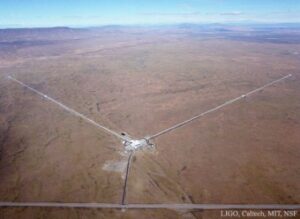 Anticipated by various tweets and unconfirmed rumors, awaited for years, pursued by experiments in America (LIGO, as shown) and in Europe (VIRGO, in Cascina, Italy), their discovery might be announced at a press conference in Washington tomorrow, February 11. And it could represent the event of the century.
But what is it about? Why are these gravitational waves so important? swiss replica watches
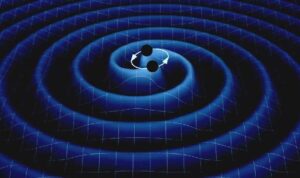
To explain it, we need to go back a century, to 1915, when Albert Einstein presented his General Theory of Relativity, a revolutionary theory that predicted how massive objects should curve spacetime, and how objects move in curved spacetime. The General Theory of Relativity also predicted the existence of Gravitational Waves, emitted by compact binary systems, like two neutron stars or two black holes.
 To wait for the first evidence that the theory was correct, we had to wait until 1974, when Hulse & Taylor measured the energy loss of a binary neutron star system (PSR B1913+16), which was in perfect agreement with Einstein’s predictions. They received the Nobel Prize in 1993 for this important first evidence, albeit indirect, of the existence of gravitational waves.
However, the path to their direct detection was still very long.
Extremely difficult to detect (Einstein himself warned that their effects were too weak) but too important not to be sought, gravitational waves are what we need to conclude an era of modern physics. For their direct detection, sophisticated experiments based on laser interferometry have been built, in America (with two instruments, in Alabama and Washington state, forming the LIGO, Laser Interferometer Gravitational-Wave Observatory) and in Europe (VIRGO – EGO, European Gravitational Observatory). Instruments capable of detecting infinitesimal ripples in spacetime, but also subject to a myriad of small disturbances from everyday life: a passing car, a sea wave, could mask the effect of a passing gravitational wave.
Indeed, both LIGO and VIRGO have been enhanced multiple times to increase their sensitivity.
(A brief report on the history of their research is available on the Media INAF website).
But perhaps tomorrow the joint efforts might receive their well-deserved reward.
The LIGO collaboration press conference will be available online, with streaming also available on the VIRGO project website.