It all began in Parkes, Australia, in April 2015, less than a year ago. The radio telescope belonging to the CSIRO (Commonwealth Scientific and Industrial Research Organisation) picked up a particular and quite rare signal: a radio burst. Discovered only eight years ago, this phenomenon has been recorded only sixteen times so far.
It all began in Parkes, Australia, in April 2015, less than a year ago. The radio telescope belonging to the CSIRO (Commonwealth Scientific and Industrial Research Organisation) picked up a particular and quite rare signal: a radio burst. Discovered only eight years ago, this phenomenon has been recorded only sixteen times so far.
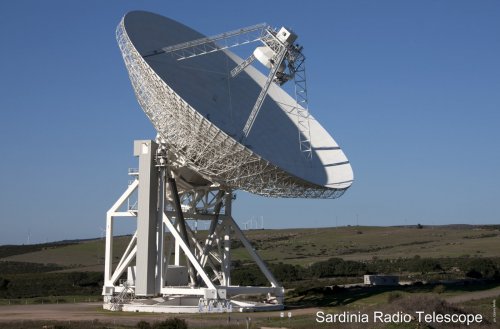
The rarity of the signal warrants further investigation and rapid observations, which is why the most advanced astronomical instruments worldwide were alerted, including the Australian Telescope Compact Array (ATCA, Australia), the Subaru Telescope (NAOJ, Japan, but located in Hawaii), and our own Sardinia Radio Telescope (INAF-SRT).
The large Sardinian telescope (a single dish with a diameter of 64 meters) was aimed at the source indicated by Parkes to observe the traces left by the burst as soon as possible. This observation was conducted by Marta Burgay, Delphine Perrodin, and Andrea Possenti, astronomers from the Astronomical Observatory of Cagliari, an INAF facility that manages the Sardinia Radio Telescope.
“In April 2015, SRT was not yet 100% operational as it is today. Thanks to the great work of the INAF team for the scientific validation of the radio telescope, SRT was able to promptly participate in the international campaign,” says Marta Burgay. “The observations from SRT, combined with those from other single-dish radio telescopes, allowed us to rule out that this FRB is associated with a repetitive cosmic phenomenon.”
It was thus discovered that this object came from a remote galaxy six billion light-years away from us. “Eight years after the identification of the first radio burst,” says Andrea Possenti, “it was finally possible to establish the birthplace of one of these events. Thanks to this, the profile of the possible ‘parents’ can be narrowed down to catastrophic, highly energetic, and non-repetitive events.”
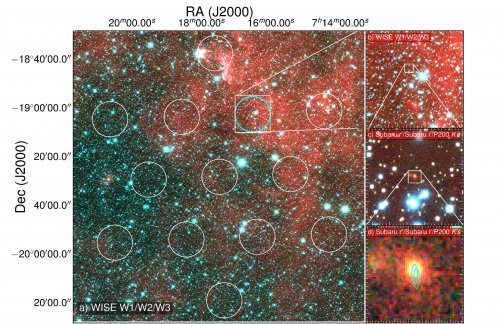
The radio burst is considered so important by scientists that Possenti openly declares “a new era in observational cosmology, where FRBs can play a complementary role to other cosmological indicators, such as supernovae.”
The implications of this discovery are not limited to the phenomenon itself, because the delays in receiving the burst, which vary based on observation frequencies and are due to the presence of intergalactic material, allowed for a more precise detection of the burst, which had been predicted by cosmological models but never observed before.
Find more details in the official INAF media release (http://www.media.inaf.it/2016/02/24/ecco-il-luogo-di-nascita-di-un-lampo-radio/), in the scientific article in English published in Nature (http://www.media.inaf.it/2016/02/24/ecco-il-luogo-di-nascita-di-un-lampo-radio/), and in the interview with Marta Burgay published on the Media INAF YouTube channel (https://www.youtube.com/watch?v=sZACaaV9H58&feature=youtu.be).