
VLBI Observations of the Water Gigamaser in TXS 2226-184*
- Date:
- Speaker: Dr. Gabriele Surcis
- Affiliation: INAF - Astronomical Observatory of Cagliari (Italy)
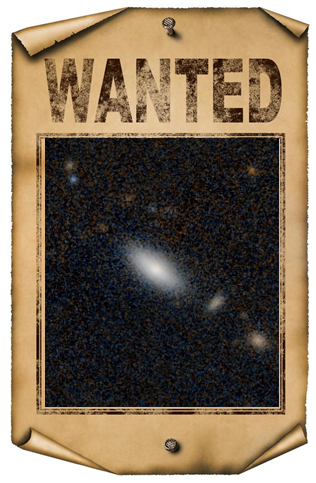
Abstract: Outside the Milky Way, the most luminous water masers at 22 GHz, called megamasers due to their extreme luminosity compared to Galactic and extragalactic water masers associated with star formation, are mainly detected in active galactic nuclei. In the case of the water maser detected in the nuclear re gion of the galaxy TXS 2226-184, the term gigamaser was used for the first time. However, the origin of this very luminous water maser emission has never been investigated in detail.
We studied the nature of the water gigamaser in TXS 2226-184 by measuring its absolute position for the first time at milliarcsecond resolution, by comparing the morphology and characteristics of the maser emission on VLBI scales after about 20 years, and by trying to detect its polarized emission.
We observed the water maser emission toward TXS 2226-184 three times: the very first time with the NRAO VLBA (epoch 2017.45) and the next two times with the EVN (epochs 2017.83 and 2018.44). The first two epochs (2017.45 and 2017.83) were observed in phase-reference mode, while the last epoch (2018.44) was observed in full-polarization mode, but not in phase-reference mode to increase the on-source integration time. We also retrieved and analyzed the VLBA archival data at 22 GHz of TXS 2226-184 observed in epoch 1998.40.
In my talk, I will show the results that we obtained from our VLBI observations and I will also present possible scenarios to determine the nature of the gigamaser.
Brief CV of Dr. Gabriele Surcis
Gabriele Surcis was born in Chiavari (Genoa) and, at the age of seven, moved with his family to Sardinia, in Cagliari. He graduated in Physics from the University of Cagliari in 2007 with a thesis on extragalactic water masers. In 2008, he began his PhD at the Argelander-Institut für Astronomie in Bonn, Germany. Three years later, he successfully defended his doctoral thesis based on magnetic field measurements around massive stars in formation through the study of polarized maser emission. He then moved to Dwingeloo (Netherlands) to work at the Joint Institute for VLBI ERIC (JIVE) as a support scientist for the European VLBI Network. There, he continued his studies on maser polarization. In 2016, he returned to Cagliari where he became a Researcher at the INAF-Osservatorio Astronomico di Cagliari. He is currently a member of the Operational Team of the Sardinia Radio Telescope (SRT) with the role of VLBI friend of the SRT within the EVN network.