
The Quest for a Panchromatic Fast Radio Burst and Prospects with the CHORD Experiment
- Data:
- Speaker: Dr. Matteo Trudu
- Affiliation: INAF - Astronomical Observatory of Cagliari (Italy)
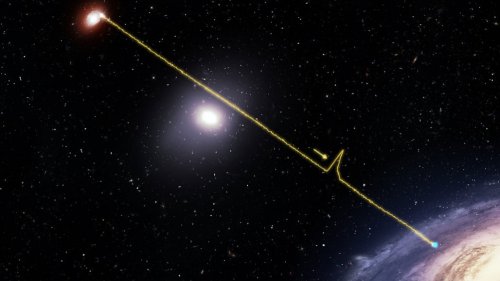
One of the most intriguing challenges in modern time-domain radio astronomy revolves around the phenomenon of Fast Radio Bursts (FRBs). FRBs are millisecond-duration, Jy-intense, radio transients of extragalactic origin and their nature is yet to be definitively understood. Thus far, FRBs have only been observed in the radio band. While their origin remains ambiguous, observational evidence suggests that magnetars, highly-magnetised neutron stars, may be the potential sources behind at least some of these bursts.
In this presentation, I will discuss the diverse efforts of the Italian community in the study of FRBs from 2020 to the present. This encompasses the development of dedicated facilities, software development, and the execution of extensive pan-chromatic campaigns toward known FRB sources. Additionally, I will elaborate on INAF’s involvement in the upcoming Canadian Hydrogen Observatory and Radio-Transient Detector (CHORD), an upgrade to the CHIME telescope. With its expansive field of view and real-time capabilities for detecting and precisely localising these events, CHORD is poised to be a game-changer, charting new frontiers in understanding this mysterious phenomenon.
Brief CV of Dr. Matteo Trudu:
Matteo Trudu completed all his studies at the University of Cagliari. After his master’s degree, Matteo Trudu spent a year as an intern at INAF – Osservatorio Astronomico di Cagliari. Subsequently, he began his PhD program under the supervision of Maura Pilia and Andrea Possenti, focusing on the study of Fast Radio Bursts (FRBs). He is currently a postdoctoral researcher at the Osservatorio di Cagliari funded by the PNRR, where he contributes to the development of CHORD, a radio telescope and successor to CHIME that will be primarily dedicated to understanding FRBs.