
An Ultra-Long Period Radio Transient
- Date:
- Speaker: Dr. Natasha Hurley-Walker
- Affiliation: ICRAR - Curtin University (Australia)
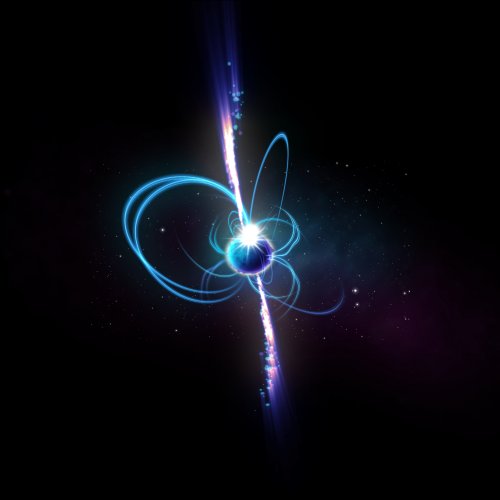
In the two decades, several puzzling radio transients have been detected using low-frequency radio telescopes, signalling intriguing high-energy events in our sky. The paucity of data on these objects has made it impossible to understand their nature. New wideband widefield telescopes are expanding the parameter space, improving our ability to detect and understand these events. We have detected a new type of low-frequency radio transient using a sky survey performed by the Murchison Widefield Array. The source’s emission is bright, highly polarised, and periodic on a timescale of ~20 minutes. Its dynamic spectrum shows high-fluence narrow-timescale “spikes” which are unresolved by our data, with fluence on par with Fast Radio Bursts generated by the Galactic centre magnetar. I will highlight the object’s main observational features, including its window of appearance, dispersion measure, polarisation attributes, and changes in its pulse profile over time. Along with X-ray and optical observations, these features have allowed us to constrain its physical attributes such as location in the Galaxy, radio luminosity, and potential magnetic field strength, which I will detail in this talk. The source is potentially an “ultra-long period” (ULP) magnetar, which are candidate progenitors for Fast Radio Bursts. I will also postulate some alternative explanations and describe how we could narrow the possibilities with future observations. Finally, I will describe upcoming observing campaigns that will help us detect further examples, and perform rapid follow-up.
Brief CV of Dr. Natasha Hurley-Walker:
Dr. Natasha Hurley-Walker is a Senior Lecturer and an ARC Future Fellow at the International Centre for Radio Astronomy Research at Curtin University. After receiving her PhD in Radio Astronomy from the University of Cambridge, she moved to Australia to assist in the commissioning of the Murchison Widefield Array, a precursor instrument for the Square Kilometer Array. She has conducted several large-scale sky surveys like GLEAM and has research interests in the life cycles of radio galaxies, supernova remnants, and transients. For her science, work on gender parity, and outreach activities, she was named WA Tall Poppies Scientist of the Year (2017), ABC Top 5 Scientist (2018), and Superstar of STEM (2019–2020). She leads the extragalactic radio astronomy group at ICRAR-Curtin and currently directs the GLEAM-X survey to explore the southern hemisphere’s radio sky, which led to the recent discovery of a new and unexpected type of periodic radio transient.